
New Delhi, July 25: India’s nationwide student protest movement came to an end on Saturday after Education Minister Dharmendra Pradhan resigned and the central government agreed to the protesters’ key demands, including reforms to the country’s examination system.
The protests, which began in late June after allegations of major examination paper leaks, grew into one of the biggest youth-led movements during Prime Minister Narendra Modi’s third term. Demonstrators demanded accountability for the examination controversy, greater transparency in recruitment and admissions, and the resignation of the education minister.
Summary
- The student protests became the biggest youth challenge faced by Prime Minister Narendra Modi since he took office in 2014.
- Union Education Minister Dharmendra Pradhan resigned, saying he wanted to prevent anti-national elements from taking advantage of the situation.
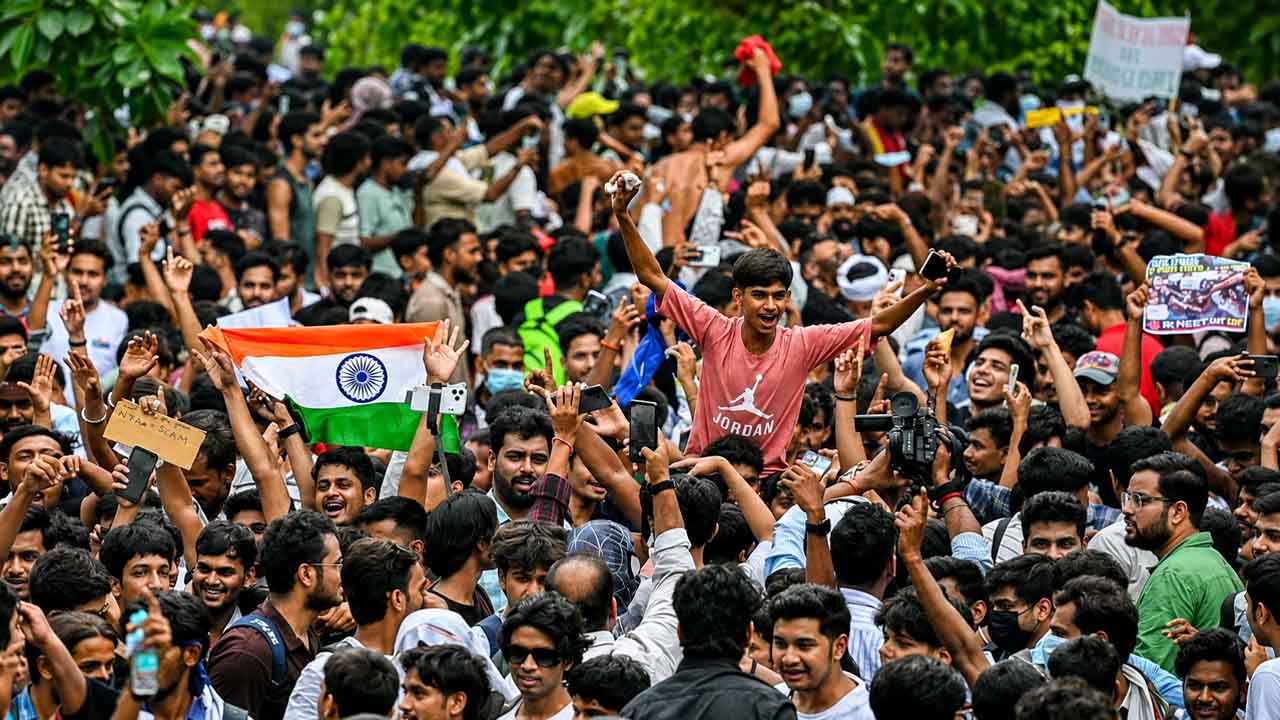
- Thousands of students celebrated the resignation, calling it a victory for their movement.
- The central government said it had accepted the protesters’ key demands, including examination reforms and other measures.
- Protest leaders announced the end of the demonstrations and urged supporters across the country to return home peacefully.
Government Holds Talks With Protest Leaders
Following Pradhan’s resignation, representatives of the student-led Cockroach Janta Party (CJP) met senior government leaders, including Union Health Minister J.P. Nadda and Minister of State Jitendra Singh. After the discussions, protest leaders announced that the government had accepted their principal demands.
The accepted demands reportedly include reforms to prevent future examination paper leaks, withdrawal of police cases filed against protesters, and compensation for families of students who allegedly died by suicide following the examination controversy.
Celebrations at Jantar Mantar
CJP leaders urged demonstrators across the country to end the agitation peacefully and return home. Thousands of supporters celebrated at Delhi’s Jantar Mantar by waving the national flag, chanting patriotic slogans, and distributing sweets.
Earlier in the week, the protests had intensified as thousands marched toward Parliament, leading to clashes with police. Authorities imposed security restrictions, temporarily closed several Metro stations, and suspended mobile internet services in parts of central Delhi.
Pradhan Explains His Resignation
After the resignation and the agreement with protest leaders, the government restored mobile internet services and reopened Metro stations around the protest site.
In his resignation message, Dharmendra Pradhan said he had stepped down to prevent the situation from being exploited by anti-national elements and expressed respect for the aspirations and concerns of India’s youth.
Background of the Protest
The movement began after allegations of leaks in a national medical entrance examination, which resulted in a re-examination affecting nearly two million candidates. The controversy intensified public concern over examination transparency and employment opportunities for young people.
Activist Sonam Wangchuk welcomed the outcome, describing it as a victory achieved through peaceful and democratic means.
Political Impact
Dharmendra Pradhan, a senior Bharatiya Janata Party (BJP) leader, had served as Union Education Minister since 2021. His resignation is expected to have political significance ahead of upcoming state elections, while the government now faces the challenge of restoring public confidence in India’s examination and recruitment systems.